Pixel Platform – First Workshop
Join our first major workshop bringing together CMOS design, sensor characterization, mechanics, electronics and system aspects.
Featured sections
Click a tile to open a dedicated page.
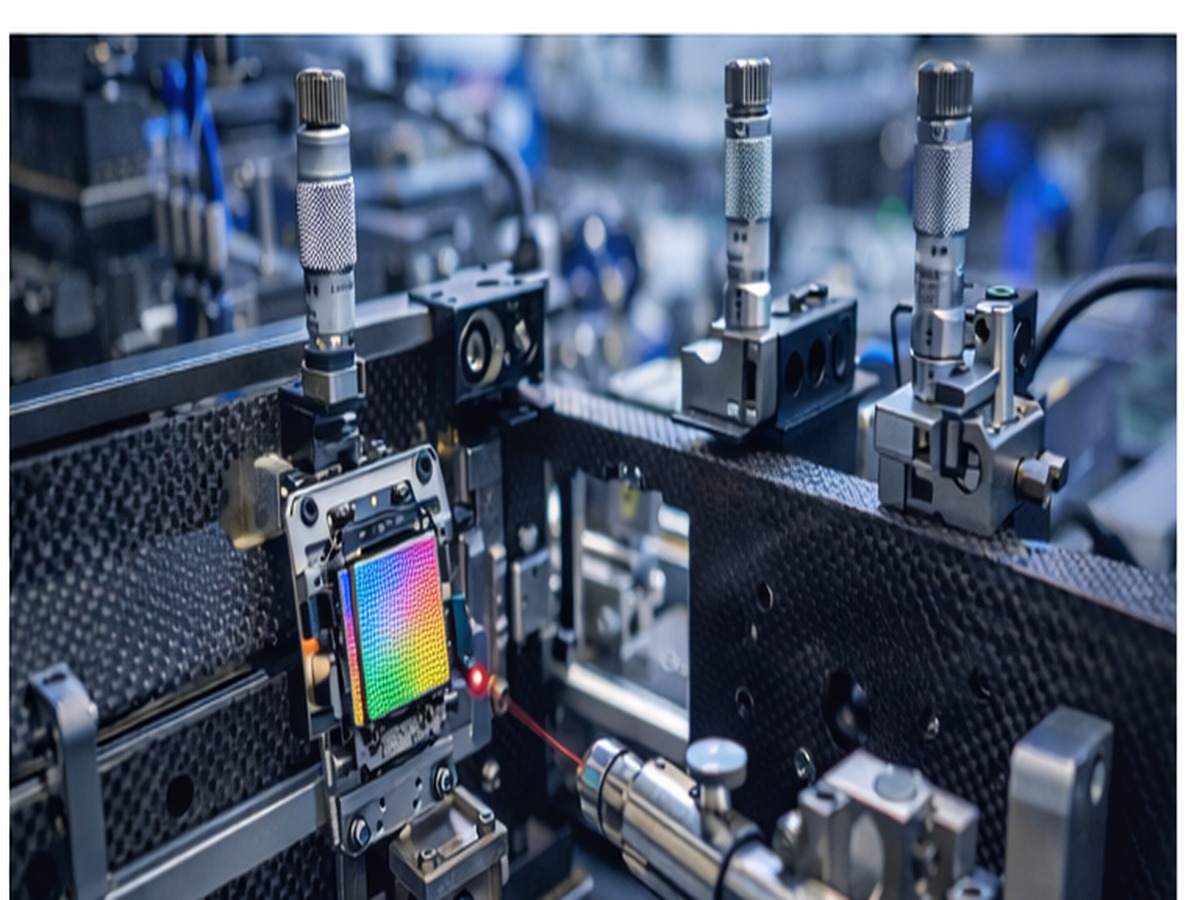
About
Pixel sensors are the eyes of modern nuclear and particle physics experiments: the first to witness the aftermath of a collision and the last arbiter of vertexing precision, the layer after which theory meets reality. The billions of pixels surrounding the collision point measure the ionization traces left behind the charged particles crossing their sensitive volume enabling precise tracking and allowing scientists to distinguish primary interaction vertices from secondary decay vertices displaced by mere fractions of a millimeter. Their ultra-thin, low-material design ensures they have minimal impact on the very tracks they record, while their speed and radiation tolerance allow them to tackle the most extreme environments of today’s colliders. They bring the extreme collision environments into sharp focus. On the GSI campus, plenty of expertise in this field is available across several experimental collaborations, the Detector Laboratory, and the Experimental Electronics department. The Pixel Platform is conceived as a competence center that brings together this distributed expertise, fostering efficient collaboration between all involved teams. It aims to support both current and new users interested in exploring new measurement opportunities based on CMOS pixel technologies.
- Prof. Dr. Silvia Masciocchi
- Dr. Bogdan Blidaru
- Dr. Lars Schmitt
Experiments at GSI that make use of pixel sensors