Low Gain Avalanche Diodes (LGAD)
More content for this section is currently being prepared.
-
Jerzy Pietraszko
✉ j.pietraszko@gsi.de
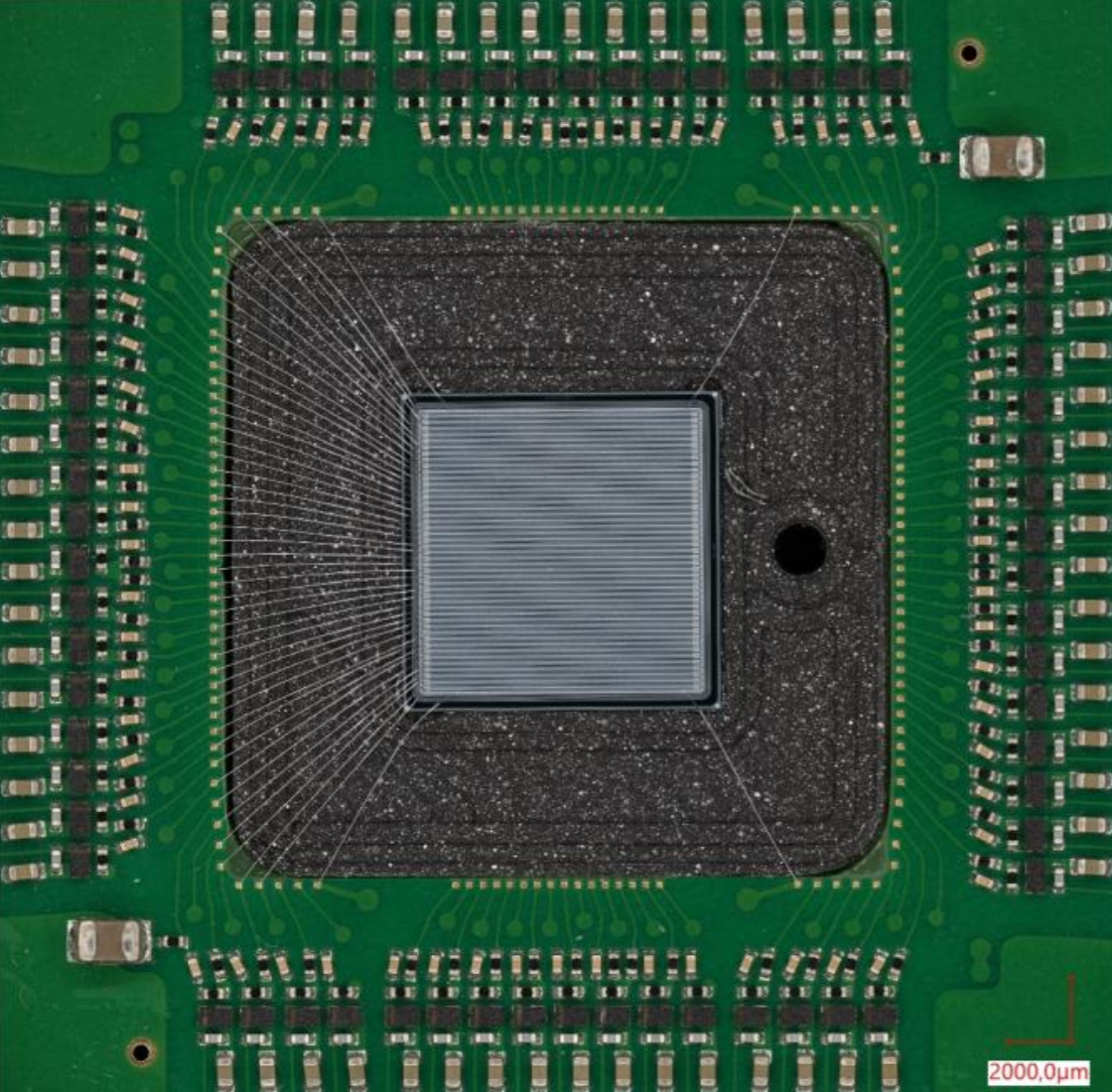
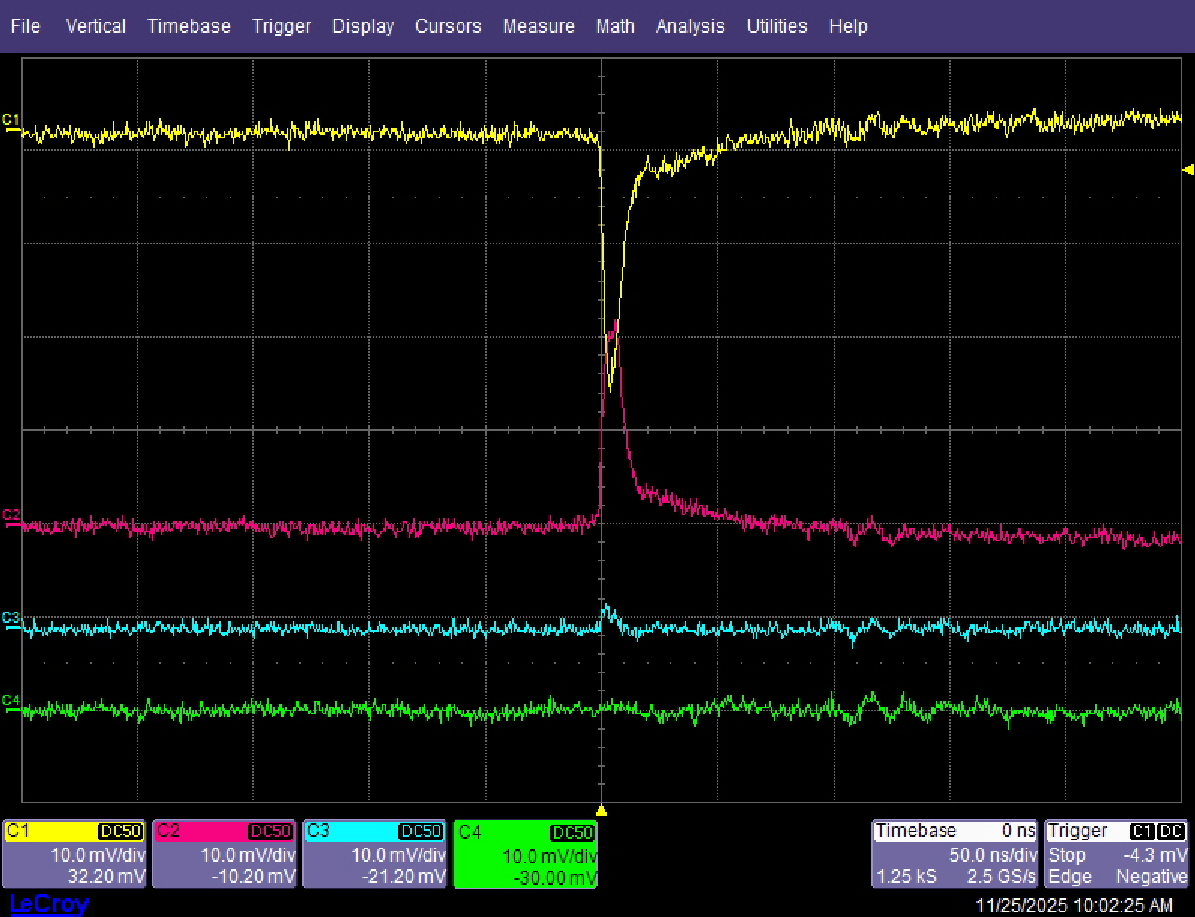
LGADs for HADES
The HADES fixed-target experiment, located at the SIS18 heavy-ion synchrotron in Darmstadt, investigates the microscopic properties of resonance matter formed in heavy-ion collisions in the 1–2 AGeV energy regime. In addition, HADES studies exclusive reaction channels induced by proton and pion beams, for both hadronic and semi-leptonic final states.
For the HADES physics program, it is essential to determine the reaction start time T0 with a precision better than 60 ps, while also monitoring key beam properties such as position, width, and time structure. The measured T0 provides the start time for the time-of-flight (ToF) measurement used in particle identification.
To ensure full control of the beam position on target, each individual beam particle must be tracked in front of and behind the target, allowing the beam parameters to be determined close to the HADES focal point. For fixed-target experiments with beam intensities of up to 107 particles/s, not only spatial information but also precise timing is crucial. Combining both into a 4D tracking approach can significantly reduce random coincidences, such as wrongly correlated hits.
Detector requirements for the upcoming HADES pion and proton beam campaigns
- Timing precision with σT0 < 60 ps for particle identification via ToF
- Operation at particle fluxes above 107 p/(cm2 s)
- Detection efficiency for MIPs close to 100%
- Low material budget, below 0.5 mm Si equivalent
- Position resolution better than σx < 0.5 mm
- Capability for operation in vacuum
- Active area of up to 8 cm2
LGAD-based detectors are excellent candidates to meet these demanding requirements. Their combination of precise timing, good spatial resolution, and high efficiency makes them particularly attractive for beam tracking and timing applications in HADES.
Prototype studies
Several dedicated tests have already been performed. Results obtained with a prototype T0 telescope for HADES, based on single-sided LGAD strip sensors, demonstrated a time precision of 47 ps. This represents an excellent result for a system based on leading-edge technology.
Reference: Prototype T0 telescope for the HADES experiment based on LGAD strip sensors